Carpenter Bee Trap – Protect Your Wood From Carpenter Bees
 Carpenter bees can turn beautiful wood into a patchwork of holes and tunnels. If you have decorative beams, porch ceilings, decks, pergolas, or trim made of exposed wood, you have a prime target for these “wood bees.” Over time, carpenter bee activity can weaken boards, stain surfaces with waste, and open the door for moisture and wood decay.
One of the most popular tools we recommend for homeowners in Eastern North Carolina is the carpenter bee trap. When used correctly—along with professional treatment of active holes and sensible repairs—carpenter bee traps help reduce bee pressure on your structures and protect your investment.
What Is a Carpenter Bee Trap?
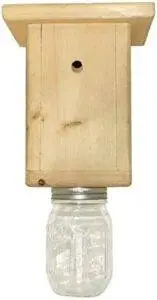
A carpenter bee trap is a simple but clever device designed to take advantage of how carpenter bees naturally search for nesting sites. Most traps include:
- A wooden block or housing with angled holes drilled into it
- A bottom chamber such as a box, plastic jar, or clear container
- Mounting hardware to hang or screw the trap onto wood surfaces
To a carpenter bee flying around your porch or eaves, those angled holes look like perfect pre-started tunnels. When a bee enters the trap and moves toward the light, it drops into the lower chamber and is unable to find the exit. Over time, more bees follow, and the trap fills.
Well-placed traps reduce the number of carpenter bees drilling new holes in your fascia boards, deck joists, and other exposed wood around your home.
How Carpenter Bee Traps Work
Carpenter bees prefer unfinished or lightly stained softwoods such as pine, cedar, and cypress. They drill a round entry hole, then turn and tunnel along the grain, creating galleries where they lay eggs and overwinter.
Carpenter bee traps use this behavior to your advantage:
- Visual cue: The trap’s wooden top mimics a piece of weathered lumber, and the pre-drilled holes look like old carpenter bee galleries.
- Sloped tunnels: The holes are typically angled upward so bees move into the trap and then down toward the collection chamber.
- Light and scent: Once inside, bees are drawn toward the light at the bottom opening, dropping into the jar or vault. Some traps also take advantage of the scent of previous carpenter bees to attract more bees over time.
- One-way design: After bees fall into the collection area, the smooth sides and small opening make it difficult for them to escape.
As the season goes on, the trap becomes more effective because the scent of bees already inside signals to other carpenter bees that this is an active nesting area.
Where to Hang Carpenter Bee Traps
Placement is one of the most important factors in how well a carpenter bee trap performs. For best results, we recommend:
- Hanging traps near existing carpenter bee holes and staining on your home
- Mounting traps under eaves, porch ceilings, gables, and fascia boards
- Placing traps at the corners and peaks of structures where bees cruise and patrol
- Using traps near decks, pergolas, arbors, and railings with exposed wood
- Positioning traps so they get decent sunlight and airflow but are still easy to access for emptying
Most homeowners benefit from using more than one trap, especially on larger homes, barns, detached garages, or long porches. A good starting point is one trap for each side or major feature with carpenter bee activity.
Are Carpenter Bee Traps Enough by Themselves?
Carpenter bee traps are a great tool, but they are only part of a solid carpenter bee control plan. To really protect your home, you should also address:
1. Active Carpenter Bee Galleries
Existing holes often contain eggs, larvae, pupae, and overwintering adults. Simply hanging traps will not remove bees that are already inside the wood. Active galleries should be:
- Inspected to confirm carpenter bee activity
- Treated with an appropriate insecticide dust or residual product (by a licensed professional)
- Sealed or plugged after bees have been eliminated to stop re-use and moisture intrusion
2. Exposed and Vulnerable Wood
Carpenter bees prefer bare or lightly stained wood. Painting or properly sealing vulnerable surfaces—especially on soffits, fascia boards, and trim—makes them much less attractive. In many cases, repairs and maintenance go hand-in-hand with trap placement.
3. Long-Term Monitoring
Carpenter bees tend to return to the same areas year after year. Regularly checking traps, watching for new holes, and staying on top of maintenance helps keep damage under control.
Benefits of Using Carpenter Bee Traps
When combined with professional treatment and good maintenance, carpenter bee traps offer several advantages:
- Helps protect wood from new damage by intercepting bees before they drill into boards.
- Reduces bee activity around decks, porches, and outdoor living spaces.
- No broadcast spraying is required for the trap itself—bees are lured into a confined device.
- Easy to monitor – you can see how many bees are being caught and decide if more traps are needed.
- Works well with professional services – traps continue to defend your home between scheduled treatments.
Keep in mind that trapping alone will not repair existing damage or stop bees that are already deep inside old galleries. That’s where a licensed pest control professional comes in.
Carpenter Bee Trap Tips From a Pest Professional
Based on what we see in the field across Eastern North Carolina, here are some practical tips:
- Start early: Hang traps before carpenter bee season peaks, typically in the spring when bees first start hovering around eaves and decks.
- Don’t remove old traps too soon: A used trap with carpenter bee scent can actually be more attractive than a brand-new trap.
- Check and empty regularly: During peak activity, check traps weekly and empty them as needed so they stay effective.
- Combine traps with treatment: Have a licensed professional inspect and treat old galleries, then use traps to help reduce new arrivals.
- Maintain your wood surfaces: Paint, stain, or seal exposed wood to make it less appealing to carpenter bees.
Frequently Asked Questions About Carpenter Bee Traps
Will carpenter bee traps attract bees to my property?
Carpenter bee traps do not normally pull bees in from long distances. Instead, they intercept carpenter bees that are already flying around your structures searching for nesting sites. Proper placement near existing activity is the key to performance.
Do traps work right away?
You may see bees investigating and entering traps within a few days, but results often improve over time as the trap develops more scent from captured bees. Many homeowners notice increasing catch numbers as the season progresses.
Can I just plug carpenter bee holes without treating them?
Plugging untreated holes can trap larvae and adults inside the wood, or force bees to tunnel out in new directions, causing more damage. It is best to have active galleries treated, then sealed or plugged once you’re confident the bees are gone.
Are carpenter bee traps harmful to honey bees?
Carpenter bee traps are usually mounted on structures and designed to mimic nesting holes in wood—not flowers. Honey bees are more interested in nectar and pollen from plants, so they are less likely to interact with traps installed properly on buildings and structural wood.
Will one carpenter bee trap cover my whole house?
Most of the time, no. Large homes, barns, or long porches often need multiple traps placed at corners, peaks, and areas with existing damage. Starting with several traps gives you better coverage and helps you see where activity is heaviest.
How D & D Pest Control Co. Helps With Carpenter Bee Problems
D & D Pest Control Co. provides carpenter bee control services across Eastern North Carolina, including Kinston, Greenville, Jacksonville, New Bern, Goldsboro, La Grange, Snow Hill, Pink Hill, Ayden, Grifton, Winterville, Richlands, Trenton, and nearby communities.
Our carpenter bee service typically includes:
- Inspection of fascia boards, soffits, decks, pergolas, and other exposed wood
- Identification and treatment of active carpenter bee galleries
- Recommendations for repairs and sealing of damaged wood
- Guidance on trap placement and long-term carpenter bee prevention
We can work with your carpenter bee traps—or recommend where to install them—to give your home an extra layer of protection after we address the active infestation.
Schedule Your Carpenter Bee Inspection Today
If you see big, buzzing “wood bees” hovering around your porch, hear them drilling, or notice fresh holes and sawdust on your trim or deck, it’s time to act.
Call D & D Pest Control Co. at (252) 523-8255 or visit ddpestcontrol.com to request a carpenter bee inspection and discuss trap options for your home.
Carpenter bee traps are a smart tool—but paired with professional treatment, they become a powerful way to protect the wood that makes your home look great.